The Psalmist’s Practice of Inner Governance
You have talked to yourself today. We all have. But there is a difference between the soul speaking to you — and you speaking to your soul.
The psalmists knew that difference. And they chose the second one.
The Practice Hidden in Plain Sight
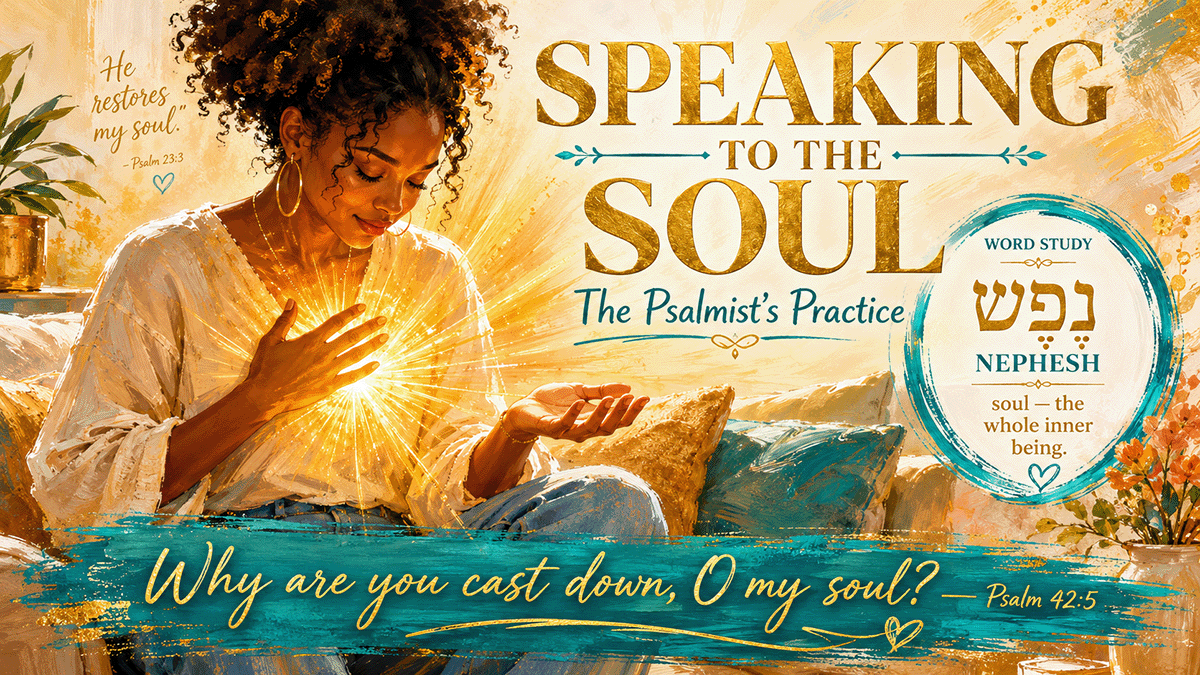
Scattered throughout the Book of Psalms is a pattern that does not always get the attention it deserves. The writers — David, the Sons of Korah, unnamed poets — stopped mid-psalm and addressed themselves. Not God. Not the congregation. Themselves.
They called out to their own soul. They questioned it. They commanded it. They corrected it. And in doing so, they modeled one of the most powerful practices in all of Scripture — what we might call prophetic self-governance through the Word.
The Passages
-
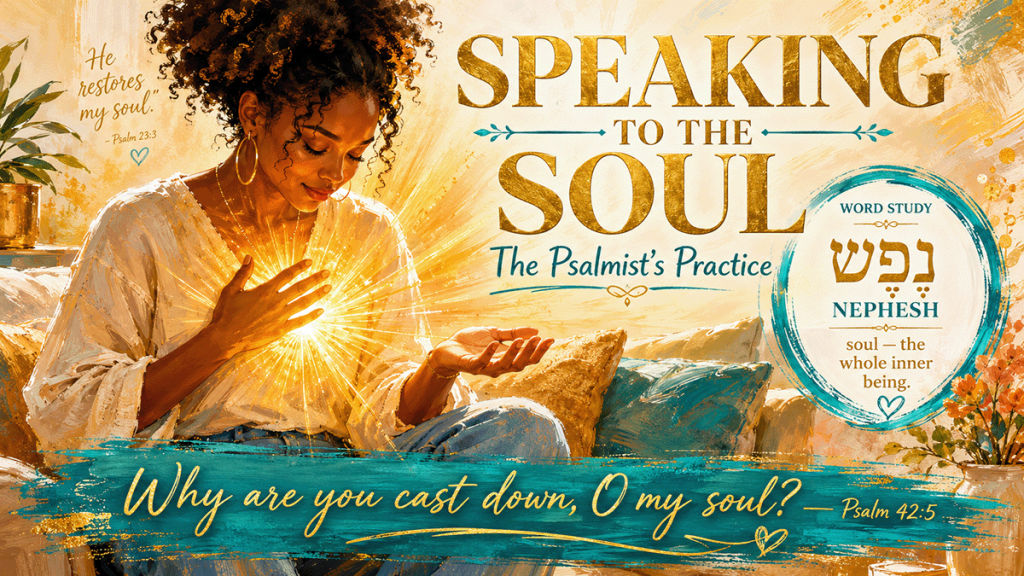
“Why are you cast down, O my soul? And why are you disquieted within me? Hope in God, for I shall yet praise Him for the help of His countenance.” — Psalm 42:5 NKJV
This refrain appears three times across Psalms 42 and 43 — likely one original psalm. The Sons of Korah were not expressing despair. They were interrupting it. They asked the soul why it was downcast, and then they commanded it: Hope in God. That is not a cry. That is a decree.
-
“My soul, wait silently for God alone, for my expectation is from Him.” — Psalm 62:5 NKJV
The soul wanted to speak. To strive. To find another way. The psalmist told it to be quiet and wait on God alone.
-
“Bless the Lord, O my soul; and all that is within me, bless His holy name! Bless the Lord, O my soul, and forget not all His benefits.” — Psalm 103:1–2 NKJV
David commanded his soul to focus. Twice in two verses. This was not passive praise rising up from a feel-good moment. This was a man telling himself what to do with everything on the inside.
-
“Return to your rest, O my soul, for the Lord has dealt bountifully with you.” — Psalm 116:7 NKJV
The soul had wandered into anxiety. The writer called it back — not by denying the pain, but by anchoring the soul in what God had already done.
-
“Praise the Lord! Praise the Lord, O my soul!” — Psalm 146:1 NKJV
Short. Direct. No negotiation. The soul does not get to vote on whether to praise. It is commanded to.
-
“Say to my soul, ‘I am your salvation.'” — Psalm 35:3 NKJV
Here David asks God Himself to speak to his soul — because he knows the soul needs to hear from its Creator directly. Even in intercession, the destination of the word is inward.
Why This Matters
Your soul — your mind, will, and emotions — does not automatically align with your spirit just because you are saved. It has to be governed. It has to be led. And the psalmists show us that one of the primary tools of that governance is the spoken Word, directed inward, with authority.
The soul that goes unaddressed will take the lead. It will tell you what it feels. It will rehearse what went wrong. It will project fear into tomorrow. But the moment you open your mouth and speak to it rather than listening to it — everything shifts.
That is what the psalmists were doing. That is what you can do. That is what you must do — especially if you stand before people as a minstrel, a worship leader, a psalmist.
You cannot lead others where you have not first governed yourself.
Prophetic Declaration
Lord, I thank You that Your Word gives me authority over my own soul. I will not be led by my emotions or driven by what I feel. I speak to my soul right now — hope in God. Be still. Bless the Lord. I choose to govern my inner man with the truth of Your Word. Let the sound that comes from me come from a governed place, in Jesus’ name. Amen.
Stay Connected
If this word ministered to you, subscribe to the Bring Me A Minstrel community for weekly devotionals, prophetic worship content, and resources for minstrels and worshippers.
Subscribe at bringmeaminstrel.com | Follow @bringmeaminstrel on YouTube | Instagram | Facebook |TikTok